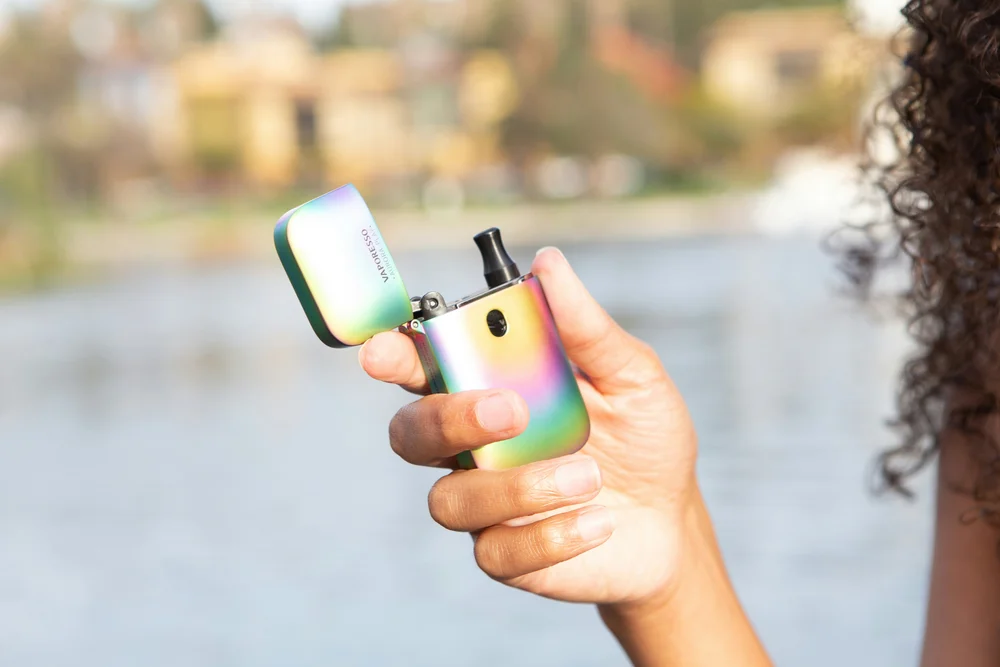
People rarely quit vaping with a cry of “That’s it, I’ve had enough!” More often, it all starts quietly. Without scenes, without witnesses, without triumph. There simply comes a moment when a person looks at the device in his hand and suddenly catches himself thinking: “What if I just don’t take a drag?” And from this almost imperceptible, internal turn, the path begins. Slow. Sometimes painful. But real.
When it comes to help in quitting vaping, many imagine something external: a nicotine patch, medicine, an electronic replacement. But real support is not about replacing a substance. It is always about a system. About a different way of living. About regaining control. And most often, it begins with something simple: awareness.
Help Is Not Always a Pill
Nicotine affects the brain. This is known. It stimulates the dopamine system, creates a “pleasure loop,” and reinforces behavior. But what is much more dangerous is what is formed around it: rituals, situations, moments. Morning coffee — and vape. Walk — and vape. Stress — and vape again. These are habits built into everyday life.
When a person decides to quit, they face more than just physical withdrawal. They are left alone with their own schedule, in which vaping has been built into dozens of micro-scenarios. And here it becomes clear: help is not what “pulls you out.” It is what helps you see where you really are.
In fact, people rarely vape simply “because they want to.” More often — because it has become a response to boredom, anxiety, discomfort. In this sense, quitting is not just stopping an action, but finding new ways to cope with life without relying on vaping.
How Real Support Works
Real help is not slogans. Not promises to quit “in 7 days.” This is an opportunity to observe. To understand what is happening inside. And it is in this vein that digital tools are increasingly used today — applications that do not give advice, do not shout, but simply show.
It is especially important here: no help should be imposed. Each person has their own rhythm. For some, it is easier to quit abruptly. Someone goes step by step. Someone just observes themselves for a month before taking a step. And all this is normal. A good support tool takes this into account.
One of these tools was the PuffStats platform. Not a motivational program. Not a “course to quit bad habits.” But a minimalist tool for self-observation, in which a person is not an object of control, but an explorer of himself.
PuffStats: Not Pressure, but Reflection
PuffStats was not created to intimidate or force. It exists for one purpose — to return awareness to a person. The principle is simple: the user records every puff. Time. Reason. Situation. Level of craving. At first, it seems strange — why write all this down? But after a few days, a shift occurs.
You begin to see patterns. It turns out that you don’t need a vape “always.” You need it at the same moments. For example, every time your boss calls. Or when you’re alone in the room. Or before bed. This is not an addiction to nicotine — it’s an addiction to a script. And it’s with this script that you begin to work.
PuffStats is also unique in that it doesn’t interfere. The app doesn’t set goals for you. It doesn’t offer “the best ways to quit” or rate you by the number of “clean days.” It just shows. It shows what you wouldn’t notice without it. It’s not just a tracker — it’s a mirror that has no distortions.
And most importantly — privacy. All data remains on the device. No clouds. No accounts. No “behavioral profile” analysis. Just you. Just your process. Just your truth.
Numbers That Speak Louder Than Habits
What does the app give? First of all — visualization. Graphs, statistics, dynamics. Not for beauty. But for honesty. When you see that you reached for a vape 15 times a day, but after a week — already 9, and then — 5, something arises that most people lack: a sense of progress. Not because someone praised you. But because it is visible. In numbers. On the screen. Before your eyes.
In addition, PuffStats allows you to analyze not only frequency, but also intensity. For example, you may have only 4 episodes a day, but each one is extremely heavy. Or vice versa — 10 short-term, light ones. These details change the approach. You begin to understand what exactly requires attention. Not abstractly “quit vaping,” but specifically: “be able to cope with stress at work,” “survive the evening without an automatic puff.”
Why This Works Better Than Advice
The problem with most “advice” is that it works on fear. “Quit it or it will be bad.” PuffStats doesn’t scare. It doesn’t interfere. It just shows. And when you see for yourself that the craving is stronger in the morning than in the evening, you start to act selectively. Without slogans. Without hysteria. You learn to replace not the entire system, but one brick. One ritual. One moment.
This is what makes the method sustainable. It is not based on motivation that comes and goes. It is based on knowledge. On the ability to listen and see yourself. On the daily practice of understanding your behavior — and not on a miraculous change that “should happen.”
Bottom Line: Help That Makes You the Boss
Quit Vaping Aid is not about a “miracle method.” It is about returning attention to yourself. The most effective tool is not a magic spray, not a receptor blocker, but an honest dialogue with yourself. When you know where you break down, why you reach for the device, in what mood you inhale the vapor — you are no longer a victim. You are a participant.
PuffStats does not provide “instructions,” but a space. A space where you can be imperfect, but attentive. Not a fighter, but an observer. And, as practice shows, these are the people who quit not for a week, but forever.
No one quits in one day. But everyone has the opportunity to start observing. Today. Without promises. Without panic. Simply — from a number. From one record. And sometimes it is this that becomes the first step to real freedom.