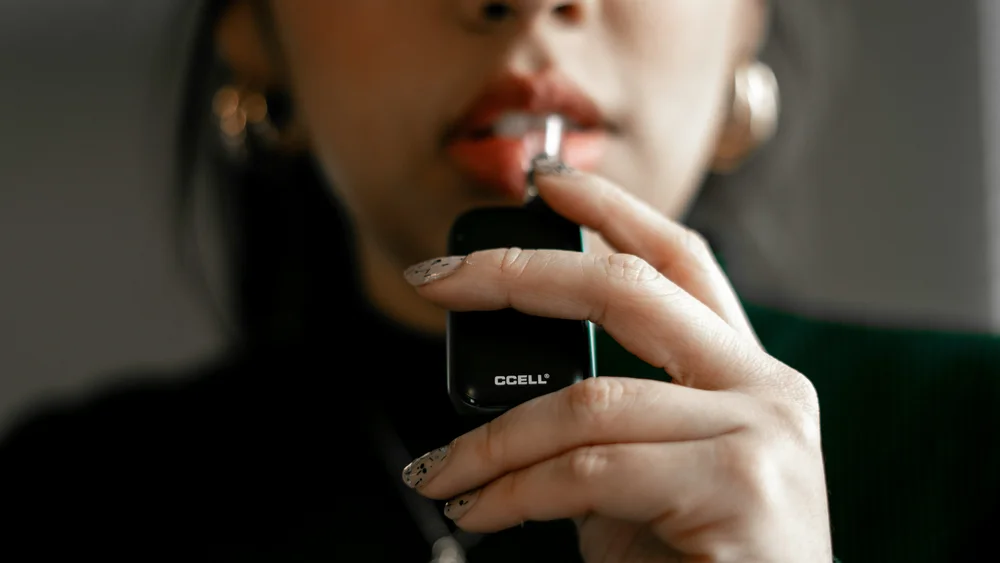
Want to know how much stress is behind your vaping and how to start cutting back with something sturdier than willpower? This guide covers both, including what the PuffStats app does and where it stops.
Most vapers can’t tell you how many puffs they took yesterday. Not roughly, not even close. That’s the odd thing about the habit: it repeats dozens of times a day, yet no single hit feels like a decision, so it stays invisible. Your daily puff count changes that. It turns a blur into a number, and the number usually says more about your stress than about the nicotine itself.
Why The Number Matters
Vaping isn’t a niche habit anymore. Federal data from the National Center for Health Statistics show adult e-cigarette use climbing from 4.5 percent in 2019 to 6.5 percent in 2023. Plenty of those users want out. In the federal PATH survey, nearly two thirds of adult vapers said they planned to quit, as reported in a 2023 study in the International Journal of Environmental Research and Public Health.
Wanting to quit and actually quitting are two different problems. That same 2023 study surveyed a convenience sample of 787 U.S. adults who had already tried to stop vaping. Of them, 53.1 percent named stress as a trigger during their attempts, another 35.2 percent named anxiety, and 41 percent reported intense cravings. About 57 percent had tried going cold turkey. Separately, an analysis of PATH data in Addictive Behaviors looked at withdrawal after people cut back or quit e-cigarettes. The 2023 study summarizes it as roughly 40 percent of adults who used only e-cigarettes reporting symptoms, a minority, and fewer symptoms than people quitting cigarettes report.
There’s a loop in there. Withdrawal itself can bring irritability and anxiety, and a puff quiets both for a little while. Part of what feels like stress relief is simply the end of a mild withdrawal. You’re treating a problem the habit created.
What A Puff Count Can And Can’t Tell You
Let’s be clear about one thing. A number on a screen isn’t a stress test. Puffs go up when you’re bored, when you’re out with friends, and when the pod is brand new. But when your daily puff count jumps on the same days your calendar falls apart, the link gets hard to ignore. A tracker won’t diagnose anything. It shows you your own pattern, and most people have never seen theirs.
Picture two weeks of data. Monday through Thursday sit at about the same level. Friday doubles. Is that the end of a brutal week or the start of a social night? The counter can’t say. The context you add can, and that’s the part worth building a routine around.
PuffStats In Detail
PuffStats is built for people quitting vaping and for smokers trying to quit nicotine altogether, and it’s free to download. Premium features sit behind a subscription, and a free trial has been offered, so check the current terms before you pay for anything. Here’s what the app actually does.
- Puff counting that takes one quick step per hit, so every puff gets recorded as it happens instead of being guessed at the end of the day.
- Trend tracking that helps you spot how your use changes over time.
- Personalized goals, which means the pace of reduction is yours rather than a template’s.
- Craving and trigger tracking, where the stress question finally gets answered with your own data.
- A streak counter that makes progress visible.
- Science-backed quit strategies, plus a community of other people trying to quit.
How It Helps You Quit
Awareness comes first. You can’t cut what you haven’t measured, and vaping is unusually easy to underestimate because there’s no pack to finish. A counter replaces a guess with a figure. Seeing 140 puffs where you assumed 60 is uncomfortable, and that discomfort is useful.
Next comes tapering. Instead of an all-or-nothing quit date, you set a target slightly under your average and lower it once it feels easy. That suits people who went cold turkey before and bounced right back. Then there are triggers. Log what was happening when a craving hit and you end up with a short list of situations to plan around, like the morning commute, the 3 p.m. slump, or a call with your manager. And finally, small wins. A running streak is a modest thing, but modest things count when you’re irritable and sleeping badly.
Now the limits. PuffStats is a tracking and planning tool. It isn’t medical treatment, it doesn’t replace a doctor, and the app doesn’t quit for you. You do. What it does is take the guesswork out of the process, which is where a lot of attempts quietly fall apart.

Step-By-Step: Reading Your Own Numbers
- Log everything for seven days before you change anything. That’s your baseline, and it’s probably higher than you expect.
- Mark the spikes. Next to each heavy day, jot down what happened: a deadline, an argument, bad sleep, a long drive.
- Record cravings the moment they hit, along with the trigger. Don’t save it for tonight.
- Set the first goal about 10 percent below your average. Dramatic cuts feel great for two days, then collapse.
- Review the weekly trend, not a single day. One awful Tuesday proves nothing.
- Treat a slip as data. Ask what was going on, adjust the plan, and keep logging.
- After two weeks, decide whether to keep tapering or pick a quit date.
How The Approaches Compare
| Approach | Visibility Into Use | Pace | Best For |
| Cold turkey | None, unless you track separately | Immediate | Light users with strong motivation |
| Gradual reduction with PuffStats | Puff counts, trends, and triggers | Set by you | All-day vapers who can’t picture a quit date yet |
| Clinician or quitline coaching | Depends on the program | Guided | Anyone who wants medical advice or nicotine replacement |
Common Mistakes And Fixes
- Logging at night from memory. The count drifts low. Log each puff as it happens, even when it’s annoying.
- Cutting too fast and rebounding. If you hit your limit by noon and then blow past it, the goal was too aggressive. Raise it a notch and try again.
- Tracking the number but not the trigger. A falling count with the same stressors often snaps back during the first rough week. Work on the trigger list too.
- Comparing counts with a friend. Devices and nicotine strengths differ, so puffs aren’t comparable between people. Compare yourself to last week.
- Treating the app as the whole plan. Add real support. In the U.S., 1-800-QUIT-NOW connects you with a free state quitline, and your doctor can walk you through options like nicotine replacement.
- Deleting the app after a bad day. The bad day is the most useful data you’ll collect.
Stress isn’t going anywhere, and neither is the urge to reach for a vape when the week gets heavy. What changes is whether you’re guessing or looking at your own numbers. Start with seven days of honest logging and see what your daily puff count says on its own.