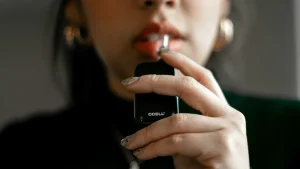
Quitting vaping means breaking not only the addiction, but also the algorithm. Because vaping has long been not just about nicotine. It’s about a script. About a routine built into the day. About hundreds of imperceptible decisions turned into automatism. Therefore, effective tips for quitting vaping are not slogans. These are instructions. Clear, technically sound actions that allow you to disassemble the addiction layer by layer — and build a new behavioral structure.
Nicotine and the Brain: How Addiction Is Formed
Any nicotine addiction begins in the brain. Vape delivers nicotine to the lungs, from where it enters the blood, and then to the brain. There it stimulates the release of dopamine — a neurotransmitter of pleasure and reinforcement. The brain remembers: there was a drag — it became easier, warmer, calmer.
A cycle appears:
Stimulus → Desire → Puff → Pleasure → Reinforcement
After a few days or weeks, this cycle becomes autonomous. The body begins to anticipate pleasure — and demand it. And then the second system comes into play — behavioral.
Behavior as a Second Addiction
Most people do not vape for nicotine as a substance. They vape for scenarios:
- “I always take a puff in the car.”
- “I need something in my hands when I’m nervous.”
- “I can’t fall asleep without a couple of clouds of vapor.”
Addiction becomes built into the response to boredom, anxiety, lunch, music, loneliness. And even if the physical craving for nicotine weakens after 3–5 days, behavioral addiction can persist for months. That is why advice on quitting should work with both systems — physical and behavioral.
Recording as the First Technical Support Point
The most effective first step is not to quit. But to start observing. And not abstractly: “It seems I vape often.” But precisely: “I took 11 puffs today. Of these:
- 4 were for no reason.
- 3 were due to anxiety.
- 4 were out of habit.”
This is not self-control. This is diagnostics. Recording allows you to turn the vague “I’m addicted” into a specific “I do this at such-and-such moments.” And that means you can influence it.
How PuffStats Works and Why You Need It
The PuffStats app is not just a puff counter. It is a minimalist interface for self-observation. The user manually records each episode:
- Time
- Reason
- Craving level
- Condition assessment
Already on the third or fourth day, you begin to see patterns. For example: in the morning — a sharp peak in craving. After lunch — weak addiction. In the evening — “automatically.” This is more important than motivation. This is data.
The app builds graphs and displays dynamics: you can see for yourself how many episodes there were on Monday and how many on Friday. You can see how you react to stress. You can see when it is easier to quit vaping, and when it is the hardest. This data turns the quitting process from an abstraction into an engineering task.
Reducing the Amount: Not a Goal, but a Method
Sharp quitting is not suitable for everyone. In most cases, the body reacts negatively: irritability, insomnia, anxiety. The principle of gradual reduction works much more effectively:
- Reduce the number of puffs by 1–2 per day.
- Postpone the first puff for 30 minutes later.
- Exclude vaping in “weak” situations — when the craving is more mechanical than emotional.
Each change can be recorded in PuffStats. Thanks to visualization, it becomes clear: there is progress. Even if you vape 10 times a day instead of 15, this is already a change in pattern. And therefore, sustainability.
Scenarios: How to Break Loops
One of the most powerful technical solutions is to analyze and rewrite scenarios. To do this, it is important to track triggers. For example:
Trigger: stress at work
Reaction: vape
Result: short-term relief
After observations, you can introduce an alternative:
Trigger: stress
New reaction: breathing 4–7–8 or a glass of cold water
Result: weakening of cravings
This is behavioral reorganization — the creation of new routes in the brain. After repeating this 5–6 times, the brain stops directly associating stress with vaping. Such a replacement is not a theory. It is a reinforced reflex, confirmed by observation and numbers.
Why PuffStats Lasts Longer Than Motivation
Motivation goes away. It is exhausted. Especially if there are no quick results. But the data remains. When a person sees a graph where the number of episodes has decreased by 40% in a month, he no longer feels that “it’s all in vain.”
PuffStats does not evaluate or punish. It does not require “clean days.” It shows. And this gives a person what is missing in the chaos of refusal — control. Calm, honest, without pressure.
The application interface is simple:
- Minimum color
- No distracting elements
- Everything is local — no clouds, accounts, or ads
This is your personal space. Your personal dynamics.
How to Understand That You Are on the Right Track
There are several signs that the technical approach is working:
- You have stopped “not noticing” the vape — it has become an object of attention.
- You have started to postpone the first puff — at least for 15 minutes.
- You no longer vape in one of the typical situations (for example, you do not take the vape into the bathroom).
- You have started to “replace” rather than “prohibit” — and it works.
If you have at least 2 points out of 4, you are already rebuilding the structure of addiction. And this is much more important than any motivational video.
Conclusion: Tips That Work If You Know How They Work
Quitting vaping is not a feat. This is engineering work. You disassemble the system, study its details, set up a new scheme. And most importantly, do not rely on inspiration. You record, check, change. Every day.
This is the approach that gives results. Not bright promises, but quiet fixation. Not fear, but understanding. And the most reliable ally here is not willpower. But attention to yourself, enhanced by precise tools. Such as PuffStats.