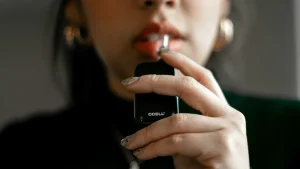
At first glance, this sounds counterintuitive. If the goal is to quit, why bother counting? Many people in the US who decide to quit vaping reason exactly like this: “I’m going to quit, so why waste time on numbers?” But here’s the rub: quitting without understanding the scale of the habit is like trying to get your finances in order without ever looking at your bank account. Your intentions may be serious, but you are acting blindly.
Why Tracking Is the First Step to Quitting
Look at how it works in other areas. People who want to lose weight start with a food diary. Those who want to become more active first put a pedometer on their phone. And the point is not in an obsession with numbers, but in stopping living in illusions.
Vaping very quickly becomes a habit that grows unnoticed. It seems like you take a couple of puffs in the morning and a couple in the evening. But as soon as you start keeping track, you suddenly realize that you have taken 150, 200, or even more puffs in a day. Without data, the brain stubbornly downplays the scale, slipping in excuses: “I don’t do it that often.” Tracking destroys this self-deception.
The Psychological Effect of Numbers
A person is designed in such a way that a real number has a stronger impact than any warnings. A chart for a day or a week can make a much bigger impression than a hundred lectures on the dangers of nicotine. Especially when you see that “a couple of puffs during a break” actually turns into dozens of small sessions every day.
At this point, the brain stops clinging to the old picture and starts asking questions: “What if I miss at least one of these puffs?” or “Why do I reach for the vape at these particular moments?” This internal dialogue is the starting point for real change.
A Break in Automatism
Most puffs happen on autopilot. It is not always a real craving — sometimes just a hand movement while thinking about something else. And such “empty” puffs can be half, or even more.
Tracking helps to bring these moments to light. When you begin to realize that you puffed not because of need, but by inertia, it becomes easier to replace the action: drink some water, take a couple of deep breaths, walk to the window. These are small things, but they are the ones that slowly destroy the strong circle of habit.
How PuffStats Works
In 2025, it is not surprising that the solution is in the phone. PuffStats is not a dry counter, but a smart assistant. It records every puff, counts the time between them, builds detailed graphs, shows the average for the day and week, helps set goals and track their implementation.
For example, you can set a goal — to reduce the total number of puffs by 15% per week. Or increase the interval between them to an hour. The application gently reminds: “Are you sure you need this now?” and at the right moment stops you from an automatic movement.
Most importantly, PuffStats is available in the App Store for iPhone users in the US. This means you can start tracking today, without having to buy any additional hardware.
American Scenarios
- A student in California. Lectures on campus, coffee at Starbucks, meetings with friends. It seems like he vapes rarely, but the statistics for the day show 230 puffs. After this number, it is impossible to continue convincing yourself that “everything is under control.”
- An office worker in Chicago. He has a habit of going out “for a couple of minutes” with colleagues. But PuffStats shows that these breaks steal an hour of work time every day. Reducing the number of puffs provides not only health benefits, but also an extra hour for work.
- A truck driver. He spends his days on the road, crossing several states. Previously, vaping was a constant companion, but now he challenges himself: endure 30 minutes, then an hour, then two without a puff. PuffStats turns it into a game, and the main prize is health and more energy by the end of the day.
Motivation Through Control, Not Prohibition
Many are afraid to keep track, thinking that it will lead to stress. In fact, it is the opposite. When you see your numbers and see how they gradually decrease, it does not put pressure on you — it inspires you. Small victories accumulate, and the numbers turn from cold statistics into proof that you are moving in the right direction.
That is why tracking is not an enemy, but an ally. It is not about prohibitions, but about understanding that every day without unnecessary puffs is a step towards freedom.
Conclusion: Counting Means Managing
Quitting vaping is not a one-time decision, but a process. And any process is easier to go through when you see the entire path. PuffStats gives an honest mirror in which you can see exactly how much time and effort the habit takes. And most importantly, it shows that it can be controlled.
Every day with fewer puffs and longer intervals between them strengthens your confidence: quitting is possible. And the sooner you start counting, the sooner you will understand that control is already in your hands.