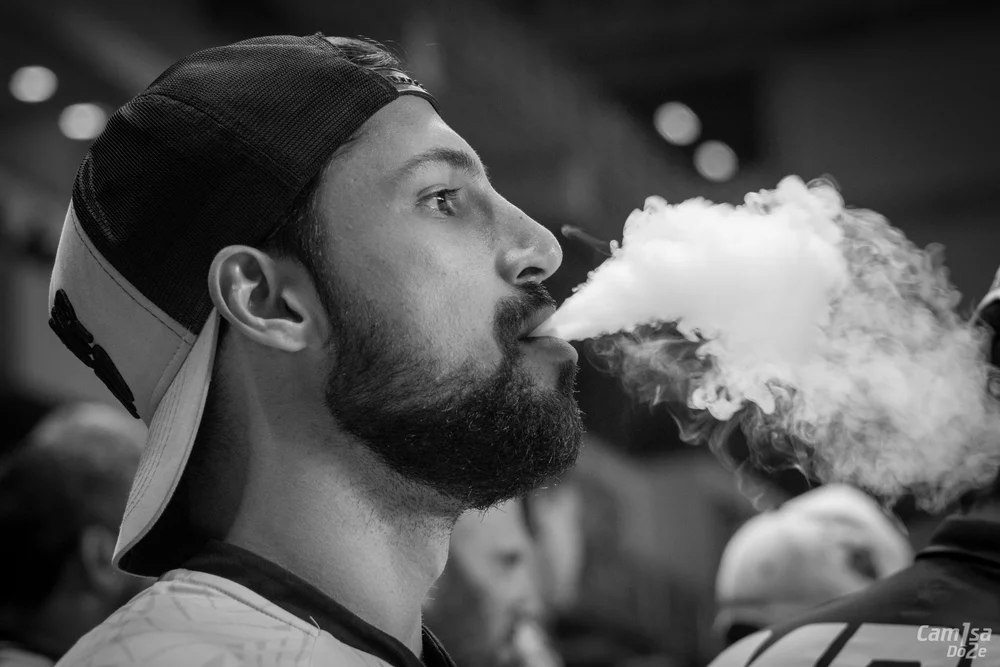
When someone picks up a vape for the first time, they don’t think they’re becoming a smoker. There’s no smell of tobacco, no lighter involved, no freezing outside in designated areas. Vaping feels modern. Convenient. Flavored. Almost like a toy.
And that’s exactly why the vaping habit forms so quickly. It doesn’t feel dangerous. It doesn’t feel shameful. And before long, it becomes just another part of the day: with coffee, in traffic, while texting, at the desk. What once felt like a rare treat or a stress-relief tool becomes a reflex. A ritual. An automatic behavior stitched into daily life.
The Brain Adjusts — Fast
Nicotine works quickly, and it works quietly. It boosts dopamine, creating a direct link between the inhale and a feeling of reward — relaxation, clarity, or calm. Vaping becomes more than just a habit. It becomes a tool to manage emotions. Without it, focusing is harder. Nerves are edgier. Everything feels slightly off.
Here’s the catch: unlike a cigarette, a vape doesn’t end. There’s no filter burning down. No signal to stop. It’s always ready, always within reach, always “just one puff away.” And for many people, that turns into 200, 300, even 400 puffs per day — without even realizing it.
Why Quitting Feels So Hard, Even If You Want To
A lot of people do want to quit. Or at least cut back. They try skipping the morning puff. Or banning vaping in the car. Or setting a rule: “only after lunch.” But by day three, the old pattern returns.
The problem isn’t just nicotine. It’s behavioral. Vaping is tied to specific moments, movements, moods. You don’t just give up the chemical — you give up a habit loop. And when willpower fails, frustration builds, and the brain craves comfort — it’s easy to fall back in.
That’s why going cold turkey doesn’t work for everyone. What does work? Seeing the habit. Not just feeling it. Actually understanding what’s happening — clearly, visually, honestly. That’s where the PuffStats app comes in.
What PuffStats Does — and Why It Actually Works
At first glance, PuffStats seems simple: a tracker, some timers, and a few graphs. But that’s exactly why it works. It helps users see how, when, and how often they vape — and most importantly, how those patterns are changing.
Key features of PuffStats:
- Time Without Vaping Tracker – down to the second. Even on tough days, you can see progress.
- Money Saved Calculator – seeing how much you used to spend per week or month is eye-opening.
- Usage Graphs – clearly show when cravings hit hardest: morning? Night? After work?
- Personal Goals and Reminders – you set your own limits: “no vaping before noon,” “3 max per day,” “vape-free weekends.”
- Zero Guilt Approach – no alarms, no scolding, no shame. Just data. Just encouragement.
PuffStats isn’t a coach barking orders. It’s a partner. One that gives you your power back.
Building a New Habit: How PuffStats Supports Real Change
Addiction works like a loop: situation → trigger → reaction → reward. PuffStats helps break that loop — not through pressure, but through awareness.
When you start seeing the actual numbers, you begin to notice what you used to ignore. You see the stress-puffs. The boredom-puffs. The “just because” ones. And you start asking the question: “Do I really need this right now?” That pause is everything.
Day by day, that pause gets easier. More frequent. More confident. You’re not forcing yourself to quit — you’re making more conscious choices. That’s how real change starts.
That’s why PuffStats works. It doesn’t fight you — it helps you see where you can shift, little by little, one choice at a time.
Conclusion: The First Step to Freedom Is Seeing the Pattern
Vaping isn’t “just a dumb trend” or “a harmless hobby.” It’s a deeply wired behavior tied to feelings, routines, and everyday stressors. Breaking that cycle takes more than willpower — it takes structure. It takes clarity.
That’s what PuffStats provides.
It won’t make you quit. It won’t guilt-trip you. But it will give you something powerful — the ability to see your habit for what it is. The ability to track, to adjust, to build momentum. To reclaim a sense of control you might’ve thought was gone for good.
And sometimes, that’s all it takes to start turning the tide.