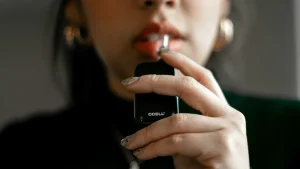
At first glance, the question sounds simple. Everyone has their own rhythm of life, their own habits, their own little joys — and for many, vaping has become one of them. Some take a couple of puffs with their morning coffee, some take the device in their hand at every opportunity, and some practically never let it out of their pocket all day. But where is the line beyond which a habit ceases to be harmless and turns into a serious addiction?
Average Numbers
According to observations and average data, the average vaper takes from 400 to 500 puffs a day. If you translate this into sessions, you get about 10 “approaches” to the device, each of which can include 40–50 puffs.
These numbers are not the norm, but rather a reflection of how the lives of most active users are arranged. Everyone has their own reality: some vape only in the evenings, while others vape from the moment they wake up until bedtime. And what is important is that people often do not even realize that the number of puffs per day exceeds several hundred.
What Determines the Number of Puffs
The Nicotine Content in the Liquid
The higher the strength, the fewer puffs are usually required to achieve the same effect. But the risk of quickly developing an addiction is higher.
Behavioral Habits
Some vape in certain situations — while driving, at the computer, on a walk. Others use the device without a special reason, simply because it is at hand.
Device Type
POD systems and compact vapes allow you to take short, frequent puffs almost unnoticeably.
Psychological State
Stress, boredom, the habit of “keeping your hands busy” — all this increases the number of sessions.
Why There Is No “Safe” Amount
Nicotine remains nicotine, regardless of the form of consumption. Any regular dose maintains addiction and affects the body: it increases blood pressure, accelerates the heart rate, affects blood vessels, and impacts the brain.
Yes, vaping excludes tobacco combustion products, but with frequent puffs, the body receives significant doses of nicotine and other substances that are formed when the liquid is heated. And most importantly, unlike cigarettes, vaping does not have a clear “beginning” and “end” — this makes the process potentially endless.
Consequences of High Frequency Vaping
- Growth of Addiction — The more often you puff, the higher the level of nicotine in the blood and the stronger the need for its constant supply.
- Strain on the Heart and Blood Vessels — Frequent doses stimulate the cardiovascular system, creating additional pressure on it.
- Irritation of the Respiratory Tract — Vapors can cause dryness, irritation, and coughing.
- Violation of the Perception of the “Norm” — A person feels like they are doing less than they actually do, and this inhibits the desire to change something.
Sometimes high frequency of vaping manifests itself indirectly: sleep deteriorates, anxiety increases, mood swings appear. All of these are signals that the body is overloaded with nicotine.
How to Understand That You Are Taking Too Many Puffs
- Morning urges to vape appear immediately after waking up.
- It is difficult to concentrate or calm down without a device.
- Dry mouth, sore throat, or cough are often felt.
- In familiar “stressful” situations, puffs become more frequent and deeper.
If at least two of these signs are familiar to you, it already makes sense to think about cutting back.
Strategies for Reducing the Number of Puffs
Gradual Reduction
Set a limit and reduce it by 10–20% every week.
- Change Triggers
Replace vaping with other activities — a short walk, water, breathing exercises. - Delayed Access
Put the device away from the work area so that each puff requires effort. - Use Trackers
Apps that record the number of puffs help to see the real picture and motivate you to reduce. - PuffStats: Assistant in Habit Control
One such tool is PuffStats — an app created for those who want to control the frequency of vaping and, if desired, give it up.
What PuffStats Can Do:
- Records every puff (manually or automatically).
- Calculates the total dose of nicotine per day and per week.
- Allows you to set goals and track their implementation.
- Shows progress in clear graphs.
- Motivates with reminders that help you not to break down.
For many, PuffStats becomes a starting point: at first you just record, then you start to reduce. The app turns the abstract “I need to vape less” into a concrete and measurable plan, which increases the chances of success.
Conclusion
Each vaper really has to decide for themselves how many times a day they will vape. But the higher this number, the more difficult it is to control the addiction and the greater the burden on the body.
The first step to change is to see the real number of puffs. For some it will be 500 a day, for others — 200, but the essence is the same: control gives birth to awareness, and awareness opens the way to reduction and, perhaps, complete refusal.
And if you start tracking today, tomorrow it can become your best habit — the habit of controlling yourself, and not letting the habit control you.